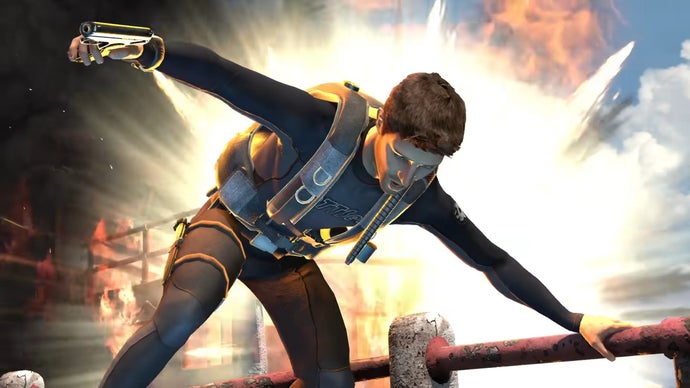
The gaming industry’s obsession with remakes has reached a fever pitch in recent years, with publishers scrambling to revisit their back catalogs for potential reimaginings. However, not everyone is convinced that every beloved franchise needs the remake treatment just yet. The original designer of the Uncharted series has spoken out, suggesting that a full remake of the iconic adventure series simply doesn’t make sense at this point in time. This perspective has resonated with many gamers who feel the industry’s resources could be better allocated elsewhere.
The sentiment reflects a growing concern among both developers and players about the direction of modern game development. While remakes can breathe new life into genuinely dated experiences, there’s a valid argument that some games simply don’t need them yet. The Uncharted Nathan Drake Collection, which already exists as a remastered version of the original trilogy, still holds up remarkably well by today’s standards. The jump from PlayStation 3 to current hardware wasn’t so dramatic that the games have become unplayable or visually obsolete.
The Case for Preserving Development Resources
The designer’s argument centers on a practical consideration: the enormous resources required for full-scale remakes. Modern game development is an expensive, time-consuming endeavor that can consume hundreds of millions of dollars and years of development time. When studios pour these resources into remaking games that are still perfectly playable, they’re essentially diverting attention from projects that genuinely need preservation or revival. The PlayStation 2 and original Xbox era, for instance, contains countless classics that have become increasingly difficult to experience on modern hardware.
This generation gap represents a genuine preservation crisis in gaming. Unlike films or books, video games often become completely inaccessible once their original hardware becomes obsolete. Titles from the early 2000s frequently lack backward compatibility support, and their original physical copies are becoming rare and expensive. These are the games that truly deserve the remake treatment – experiences that new generations of players simply cannot access without significant barriers. The contrast with more recent titles is stark: most PlayStation 4 games require nothing more than a simple performance patch to look and play excellently on current systems.
Understanding the Economics of Gaming Nostalgia
The push for remakes of relatively recent games often stems from pure economics rather than genuine necessity. Publishers recognize that established franchises carry built-in audiences and reduced marketing risks. A remake of a beloved title guarantees a certain level of commercial interest, whereas new intellectual properties represent significantly higher financial gambles. This calculus has led to an oversaturation of remakes and remasters, sometimes at the expense of innovation and the preservation of genuinely endangered gaming history.
Industry analysts have noted that the sweet spot for remakes typically falls around the 15-20 year mark, when games have become technically dated enough to benefit from modern development techniques while retaining enough nostalgic appeal to attract both returning fans and curious newcomers. The original Uncharted released in 2007, placing it just at the edge of this window. However, the existence of the Nathan Drake Collection, released in 2015, complicates the equation significantly. Players seeking to experience Drake’s early adventures already have a polished option available.
Looking Forward: What Gaming Preservation Truly Needs
The conversation sparked by the Uncharted designer’s comments extends beyond a single franchise. It touches on fundamental questions about how the gaming industry approaches its own history. While Hollywood has always had mechanisms for preserving and redistributing classic films, gaming has historically struggled with accessibility to its heritage. The industry now faces a choice between continuously polishing already-accessible experiences or doing the harder work of rescuing games that risk being lost entirely to time and technological obsolescence.
As the gaming medium matures, these preservation debates will only intensify. The designer’s stance represents a thoughtful perspective that prioritizes genuine need over commercial expediency. Whether publishers will heed such advice remains to be seen, but the conversation itself marks an important moment in gaming’s ongoing relationship with its own rapidly accumulating history.
Expert Opinion: The gaming industry is approaching an inflection point regarding remake priorities. Studios would be wise to focus preservation efforts on titles from the PS2/Xbox era and earlier, where technical barriers genuinely prevent modern players from experiencing classics. We can expect to see a more strategic approach to remakes in the coming years, with publishers increasingly recognizing that recent titles need only performance updates rather than full rebuilds, ultimately leading to better resource allocation across the industry.