Legendary video game designer Hideo Kojima has once again stepped into his unofficial role as film critic, offering a surprisingly favorable perspective on a Netflix horror release that has been largely dismissed by mainstream reviewers. The creator of Metal Gear Solid and Death Stranding took to social media to share his thoughts on “The Last House,” a post-apocalyptic thriller that has struggled to find appreciation among critics and audiences alike. Despite the film’s poor reception, Kojima found something meaningful in its exploration of human isolation and survival.
“I watched ‘The Last House,'” Kojima posted on social media. “Isolation? Loneliness? There were parts that felt a little like Death Stranding.” This comparison to his own critically acclaimed video game immediately caught the attention of his millions of followers, many of whom value his unique perspective on storytelling across different media. Kojima has long been known for his eclectic taste in films and his willingness to find merit in works that others might overlook, making his reviews a fascinating window into the mind of one of gaming’s most innovative creators.
The Last House: A Family Survival Story That Divided Audiences
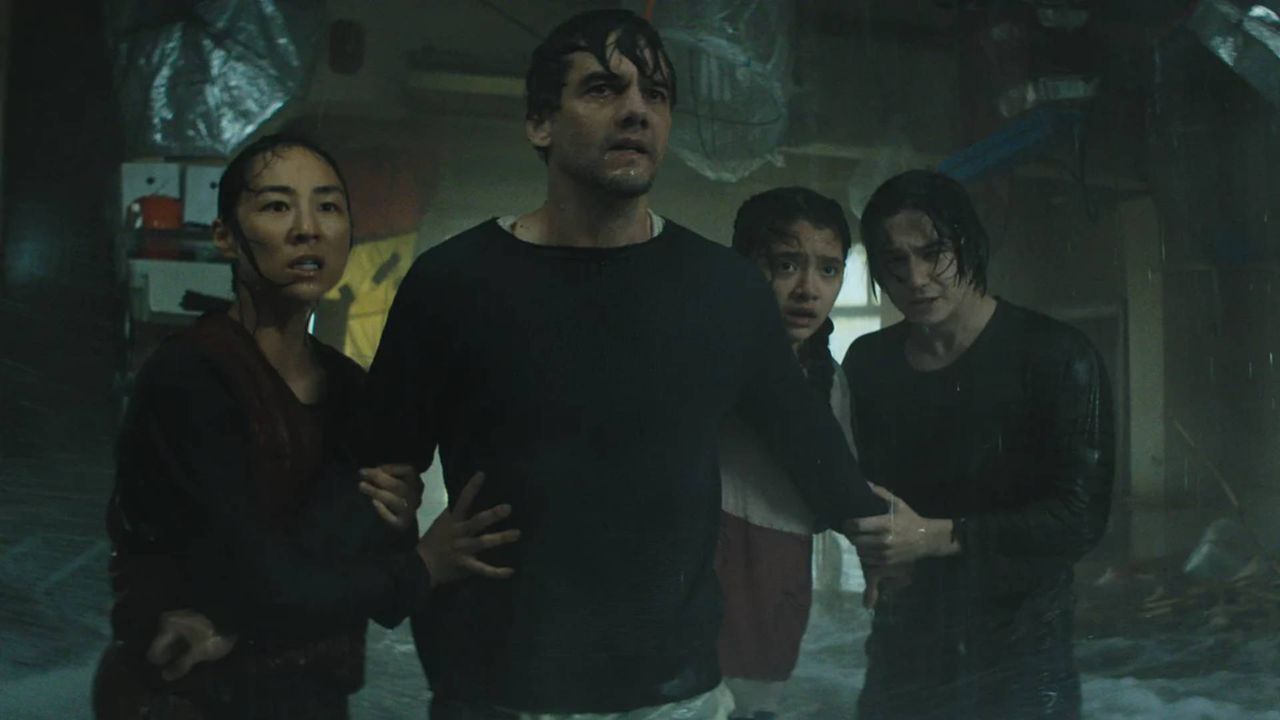
Directed by Louis Leterrier, whose previous credits include the heist thriller “Now You See Me” and the action blockbuster “Fast X,” “The Last House” represents a departure into more intimate horror territory. The screenplay, penned by Matthew Robinson of “The Invention of Lying” fame, follows a family trapped within their home as an unexplained catastrophe engulfs the outside world. The film stars Greta Lee, known for her acclaimed work in “Past Lives,” alongside Wagner Moura, Arden Cho, and young actor Noah Alexander Sosnowski. Despite this talented ensemble, the film has earned a dismal 27% critic score on Rotten Tomatoes, with audience reactions proving equally harsh at 28%.
Critics have been particularly vocal about the film’s shortcomings, with many pointing to what they describe as a “half-baked” narrative that fails to fully develop its intriguing premise. A common complaint centers on the lack of time devoted to establishing the family dynamics before the crisis unfolds, leaving viewers without sufficient emotional investment in the characters’ survival. Some reviewers have suggested that the film’s ambitious concept required either a longer runtime or a more focused approach to character development to truly resonate with audiences.
Death Stranding: Kojima’s Vision of Connection Through Isolation
Kojima’s comparison to Death Stranding is particularly illuminating given the thematic weight of his 2019 masterpiece. The game, which stars Norman Reedus as a courier named Sam Porter Bridges, takes place in a devastated America where humanity has retreated into isolated underground cities called Knot Cities, which together form the United Cities of America. Players must traverse dangerous terrain filled with supernatural entities known as BTs (Beached Things) and hostile survivors while delivering essential supplies and working to reconnect scattered communities through a wireless communications network. The game received widespread critical acclaim for its unique gameplay mechanics and its profound meditation on human connection in an age of increasing isolation.
What makes Death Stranding particularly relevant to Kojima’s observation about “The Last House” is its central thesis: that meaningful connections between people can emerge from and even be strengthened by periods of profound isolation. Released months before the global pandemic would make its themes startlingly prescient, the game explored how technology, physical distance, and shared purpose intersect in maintaining human bonds. Kojima’s ability to recognize similar themes in Leterrier’s film demonstrates his analytical approach to consuming media across different formats.
From Game to Screen: The Death Stranding Movie Adaptation
The timing of Kojima’s film review is particularly interesting given the ongoing development of a live-action Death Stranding movie adaptation. Director Michael Sarnoski, who earned critical praise for his work on “A Quiet Place Part II” and the Nicolas Cage drama “Pig,” has been tapped to helm the project. While specific details about the adaptation remain closely guarded, the choice of Sarnoski suggests a focus on atmospheric tension and emotional depth rather than pure action spectacle. The film currently lacks a confirmed release date, but anticipation among fans remains high given Kojima’s direct involvement in the project.
Kojima’s reputation as a cinephile has only grown over the years, with his social media accounts serving as an ongoing diary of his viewing habits and critical observations. He frequently champions overlooked or underappreciated films while engaging thoughtfully with both mainstream blockbusters and art house cinema. This dedication to film appreciation has informed his game design philosophy, with Death Stranding featuring appearances from numerous film industry figures including Mads Mikkelsen, Léa Seydoux, and filmmaker Guillermo del Toro. His endorsement of “The Last House,” while hardly a full-throated defense of the film, may encourage some of his devoted followers to give the Netflix release a chance despite its poor reviews.
Expert Opinion: Kojima’s ability to identify thematic resonance in critically dismissed works speaks to his sophisticated understanding of storytelling mechanics across media. His comparison suggests that “The Last House” may contain genuine artistic merit in its exploration of isolation that reviewers, focused on conventional narrative execution, may have overlooked. As the entertainment industry increasingly bridges gaming and cinema, voices like Kojima’s become invaluable in helping audiences discover unexpected connections between seemingly disparate works.