
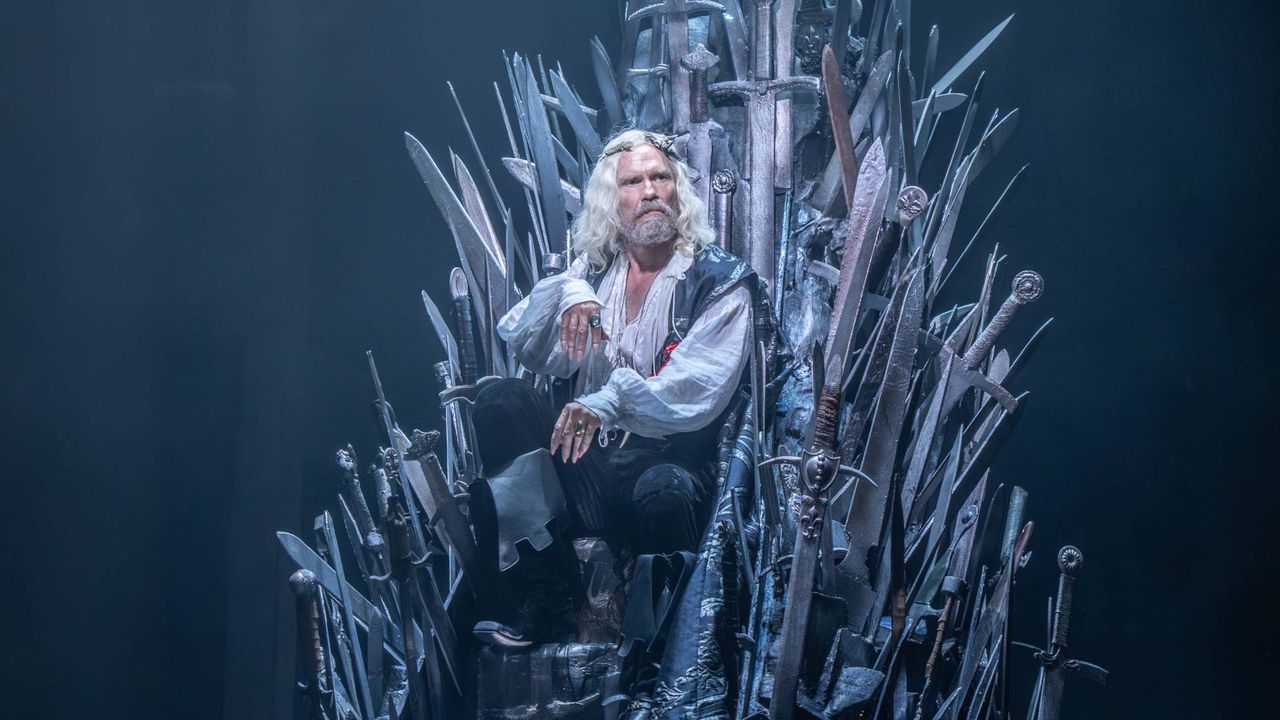
The Targaryen dynasty has arrived in the heart of England, and the experience is nothing short of extraordinary. The Royal Shakespeare Company’s ambitious new production, Game of Thrones: The Mad King, has opened its doors at Stratford-Upon-Avon, offering audiences a deeply immersive theatrical journey through one of fantasy literature’s most pivotal historical moments. Adapted by acclaimed playwright Duncan MacMillan and directed by Dominic Cooke, this theatrical spectacle brings to life the events that preceded the original novels and HBO television series, chronicling the fateful Tournament at Harrenhal that would ultimately reshape the political landscape of Westeros forever.
For devoted followers of George R.R. Martin’s sprawling fantasy epic, this production represents something truly remarkable: the opportunity to witness legendary events that have only been whispered about in the source material. The tournament at Harrenhal, where Crown Prince Rhaegar Targaryen controversially crowned Lyanna Stark as the queen of love and beauty rather than his own wife, sparked a chain of events leading to Robert’s Rebellion and the near-extinction of House Targaryen. The play doesn’t merely recreate the tournament itself but ambitiously encompasses the entirety of the rebellion, delivering a breathtaking three hours and forty minutes of action, drama, and heartbreak.
Stepping Into Westeros: The Immersive Experience
Upon approaching the Royal Shakespeare Theatre on a glorious summer day in William Shakespeare’s historic birthplace, visitors are greeted by a digital sign welcoming them to Westeros—an immediate signal that reality is about to be left behind. Inside the auditorium, the immersion begins instantly. Atmospheric music fills the space while a central brazier crackles with real flames at the heart of an innovative stage design featuring two intersecting catwalks surrounded by audience seating on all sides. This theatrical-in-the-round configuration places spectators mere inches from the action, transforming them from passive observers into witnesses of history.
The production values are staggeringly impressive, representing a significant investment in bringing Martin’s world to theatrical life. The horses that carry noble knights are massive, remarkably lifelike puppets operated by multiple skilled puppeteers, moving seamlessly across the stage with an almost supernatural grace. Costumes range from sumptuous velvet gowns to meticulously detailed armor bearing the beautifully painted sigils of Westeros’s great houses. Every element has been crafted with painstaking attention to detail, reflecting the RSC’s legendary commitment to theatrical excellence that has defined the company since its founding in 1961.
The staging proves particularly ingenious in its ability to convey multiple narrative threads simultaneously. While one group of characters delivers crucial dialogue at center stage, background action continues unabated—Kingsguard knights might lurk in the shadows, heads bent together in quiet conspiracy, foreshadowing dangers to come. This layered approach mirrors the complex, multi-threaded storytelling that made Martin’s novels so revolutionary in the fantasy genre.
Classic Thrones: Character and Political Intrigue
The first act recalls the elements that made Game of Thrones a cultural phenomenon—the intricate character dynamics and byzantine political maneuvering that distinguished it from more straightforward fantasy fare. There are also echoes of this year’s A Knight of the Seven Kingdoms adaptation, thanks to the tournament setting, but The Mad King carves its own distinctive identity through its focus on intimate character moments amid grand spectacle.
Harmony Rose Bremner delivers a revelatory performance as Lyanna Stark, a character who has always existed as something of a shadow in the source material, her story wrapped in mystery and defined primarily by her tragic death. Here, she blazes to vivid life—bold, outspoken, and utterly captivating. Her Lyanna chafes against the constraints placed upon highborn ladies, particularly her unwanted betrothal to Robert Baratheon, and demonstrates a fierce independence that makes her ultimate fate all the more devastating. The chemistry between Bremner and Noah Ritter’s Rhaegar Targaryen proves electric, most notably in a standout scene where Rhaegar teaches Lyanna to dance as though they were sparring—a perfect metaphor for the dangerous romance that would ignite a kingdom.
The supporting cast delivers equally compelling work. Elizabeth Ayodele brings nuanced complexity to Elia Martell, the Dornish princess caught in an impossible situation as her husband falls for another woman. Michael Abubakar’s endearing Eddard Stark—who spends Act One insisting on being called Ned—stands worlds apart from the grim, duty-bound man audiences know from the main series. Maxim Ays portrays a young, conflicted Jaime Lannister whose gradual corruption by circumstance becomes one of the play’s most affecting throughlines.
Yet it is Michael Shaeffer’s Aerys Targaryen who truly dominates the production. The Mad King is humanized to an almost painful degree—introduced with wildly unkempt hair, fingernails grown to horrifying claws, and a body covered in gashes from sitting upon the Iron Throne whose blades punish any ruler deemed unworthy. Shaeffer’s Aerys is capricious, cruel, and often darkly hilarious, yet capable of moments of genuine grief and trauma. Perhaps the production’s most moving scene comes when Rhaegar tenderly cuts his father’s unruly hair and trims those terrible nails—a moment of quiet intimacy between a son who loves his father even as he plots to overthrow him.
Robert’s Rebellion: War Comes to Westeros
The second act finds the production reaching perhaps beyond its grasp, though the ambition remains admirable throughout. Where Act One succeeds through its contained, character-driven focus, the expansion to encompass the full scope of Robert’s Rebellion inevitably sacrifices some of that intimacy. No stage production, however elaborate, can capture the totality of a brutal civil war, meaning audiences receive necessarily fragmented snapshots of the conflict rather than a comprehensive narrative.
The play’s decision to largely skip over the actual outbreak of war—picking up after the rebellion is already underway—leaves certain emotional beats feeling somewhat disconnected. Characters separated by geography communicate via raven rather than direct conversation, and much of the drama involves reactions to events reported secondhand rather than experienced directly. This is a reasonable theatrical compromise given the scope of the source material, but it does create a slight emotional distance during portions of the second half.
Nevertheless, the action sequences remain absolutely superb. The climactic clash at the Trident—where Robert Baratheon slew Rhaegar Targaryen in single combat—proves genuinely astonishing in its choreography and emotional impact. The production also finds time for deeply intimate moments amid the chaos, most notably a hauntingly beautiful scene where the women of Westeros sing a hymn to the Mother, begging divine protection for their sons and daughters in wartime. This moment brought genuine tears to many audience members, a testament to the production’s emotional power.
Ays’s Jaime Lannister becomes increasingly central as the war progresses and the Mad King spirals further into paranoid madness. This younger, more innocent interpretation of the character makes his eventual transformation—the circumstances that would earn him the contemptuous nickname “Kingslayer”—all the more heartbreaking. Watching his conscience war against his oaths provides some of the production’s most compelling dramatic material.
Revelations and the Wars to Come
For longtime devotees of Martin’s world, The Mad King offers something invaluable: canonical answers to mysteries that have fueled fan speculation for decades. Questions about what truly transpired at the Tower of Joy, the nature of Rhaegar and Lyanna’s relationship, and other long-debated topics receive definitive treatment. One fortunate theatregoer was overheard telling a companion that the play answered every question he had—high praise from a dedicated fan community known for its demanding attention to detail.
This insider-focused approach means newcomers may find themselves occasionally lost amid references to characters and events they don’t fully understand. The production wastes no time explaining established relationships or recapping prior events. Yet the sheer spectacle on display—the magnificent puppetry, the gorgeous costumes, the powerful performances—should prove more than sufficient to captivate viewers regardless of their familiarity with the source material.
The greatest barrier to experiencing The Mad King remains its exclusive location. The production deserves the widest possible audience, and hopes are high for eventual transfers to London’s West End and Broadway, along with a professional recording for those unable to make the pilgrimage. Yet there is something profoundly fitting about this tale of dynasty, betrayal, and tragedy finding its home at the Royal Shakespeare Theatre. The drama echoes the Bard’s own historical cycles—the Wars of the Roses that inspired much of Martin’s work—and Stratford-Upon-Avon’s theatrical pedigree provides the perfect context for such an ambitious undertaking. Game of Thrones: The Mad King runs at the Royal Shakespeare Theatre through September 5, 2026, offering audiences the chance to step into Westeros and witness history unfold.
Expert Opinion: This production represents a significant evolution in how premium intellectual properties can be adapted for the stage, potentially opening doors for similar ambitious theatrical treatments of major fantasy franchises. The RSC’s decision to tackle canonical events rather than original material demonstrates confidence in the theatrical medium’s ability to satisfy dedicated fan communities while potentially introducing the franchise to new audiences. Should the production transfer successfully to larger venues, we may see a new era of prestige fantasy theatre emerging as a complement to streaming adaptations.