
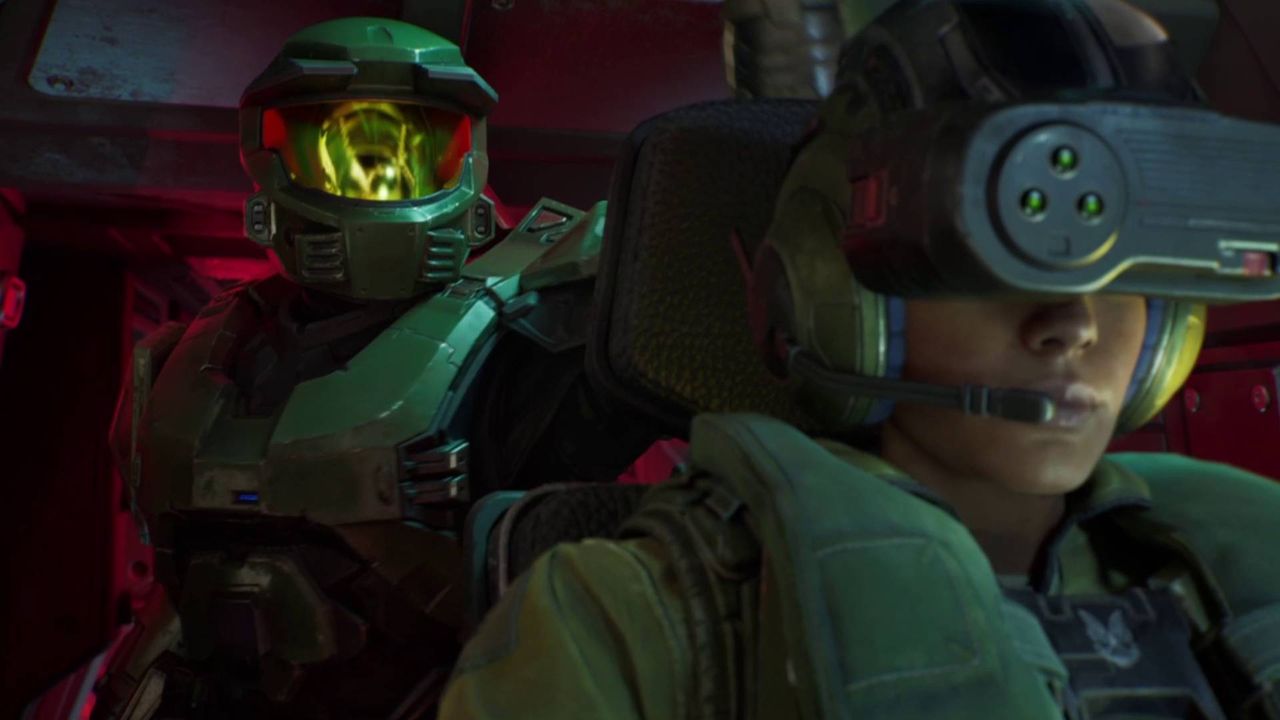
Halo: Campaign Evolved, the stunning ground-up remake of the legendary 2001 first-person shooter’s single-player experience, has achieved remarkable visual and technical excellence. However, the absence of player-versus-player multiplayer maps represents a significant disappointment for a generation of gamers who grew up battling friends in split-screen matches and attending legendary LAN parties. According to prominent industry analyst Rhys Elliott of Alinea Analytics, this missing component is precisely why the remake is dramatically underperforming compared to recent Call of Duty ports on PlayStation 5.
The numbers paint a striking picture of the current gaming landscape. Elliott’s analysis reveals that Halo: Campaign Evolved saw a remarkably even platform distribution at launch, with 42% of players on Xbox and 41% on PlayStation 5. While the game has sold approximately 1.2 million copies globally, generating roughly $67 million in gross revenue during its first two weeks, Elliott characterizes this as a soft performance for a comprehensive remake of one of gaming’s most iconic franchises. The PlayStation 5 version accounted for approximately 544,000 of those sales, a figure that becomes particularly noteworthy when compared to competing titles.
Call of Duty Black Ops Ports Dominate PlayStation Sales
The contrast with Call of Duty: Black Ops 1 and 2’s PlayStation 5 ports, which launched approximately a month before Elliott’s analysis, is nothing short of staggering. These two 1080p ports, notably neither remasters nor full remakes, have combined to sell an extraordinary 12 million copies on Sony’s current-generation console. Black Ops 2 alone accounts for 8.9 million of those sales, demonstrating the enduring appeal of what many consider the peak of the Call of Duty franchise’s golden era.
Elliott’s analysis is particularly pointed in highlighting the disparity. Two ports of 15-year-old Call of Duty games have outsold Halo’s carefully crafted remake by a ratio exceeding 16-to-1 on PlayStation, despite offering lower prices and technically inferior graphics. The analyst points to one critical differentiator: competitive multiplayer. Supporting this conclusion, data shows that only 21.7% of Black Ops 2 players on PlayStation 5 have even initiated the single-player campaign, suggesting the overwhelming majority of purchases were motivated by nostalgia for classic multiplayer experiences.
The Nostalgia Factor and Missing Multiplayer
The original Halo: Combat Evolved revolutionized console gaming when it launched alongside the original Xbox in November 2001. Developed by Bungie, the game not only established the Xbox as a serious competitor in the console market but fundamentally transformed expectations for first-person shooters on home consoles. The multiplayer component, particularly its support for split-screen gameplay and system link capabilities that enabled legendary LAN parties, created formative gaming memories for millions of players who are now in their thirties and forties. This demographic represents exactly the audience that Halo: Campaign Evolved aimed to capture.
Elliott argues that PlayStation players purchased Black Ops 2 specifically for the multiplayer experience, driven by nostalgia for competitive lobbies, killstreaks, and what many consider a less commercially aggressive era of online gaming. This stands in stark contrast to Campaign Evolved, which, while offering cooperative play, completely omits competitive multiplayer modes. Outside of Call of Duty itself, few franchises have shaped console multiplayer gaming as profoundly as Halo. The absence of this component in a premium remake targeting nostalgic players appears to have significantly limited the game’s commercial potential.
Franchise Trajectories and Future Implications
The sales disparity also reflects broader trends in the gaming industry. Call of Duty remains a global entertainment juggernaut, with annual releases consistently ranking among the best-selling games each year. The franchise has maintained remarkable commercial momentum despite occasional critical fluctuations. Halo, conversely, has experienced a more challenging trajectory in recent years. The franchise hasn’t seen a fully new mainline installment since Halo Infinite’s launch in December 2021, and that title itself faced a prolonged and troubled development cycle before achieving eventual critical and commercial success.
Whether the inclusion of competitive multiplayer could have completely closed the substantial sales gap between Halo: Campaign Evolved and the Black Ops ports remains uncertain. Call of Duty’s commercial dominance represents decades of sustained market presence and brand building that few franchises can match. However, Elliott’s analysis suggests that the decision to release a campaign-only experience, regardless of its technical excellence, fundamentally misread what nostalgic players most wanted from a Halo remake. For many fans who spent countless hours in Blood Gulch and Sidewinder, the absence of competitive multiplayer transforms what could have been a complete celebration of Halo’s legacy into a beautiful but incomplete package. As the gaming industry continues evolving, studios face increasingly complex decisions about balancing development scope, player expectations, and commercial viability in an era dominated by live-service games and nostalgia-driven purchases.
Expert Opinion: The sales data strongly suggests that nostalgia-driven gaming purchases in the current market are overwhelmingly motivated by multiplayer experiences rather than single-player campaigns, regardless of technical quality. For Halo Studios, this presents a clear mandate: any future remake or remaster efforts must prioritize competitive multiplayer to remain commercially viable against entrenched competitors like Call of Duty. The 16-to-1 sales disparity may ultimately accelerate plans for multiplayer additions or influence the development approach for future Halo projects.