
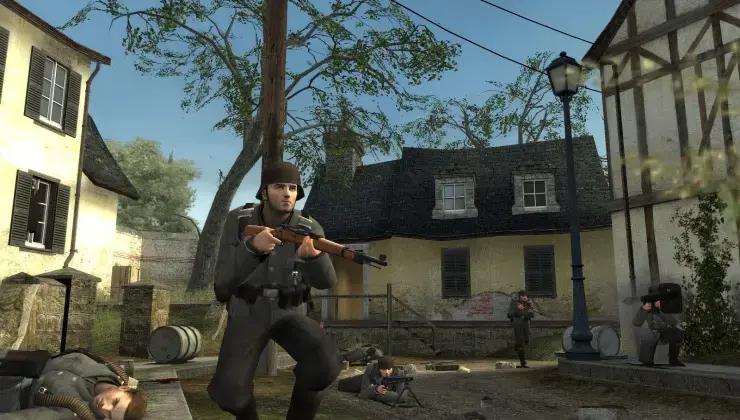
In a move that delighted long-time fans and nostalgia enthusiasts alike, Valve Corporation has rolled out significant updates to several of their classic first-person shooter titles on Steam. While the legendary game developer chose not to publicly celebrate their 30th anniversary with fanfare or major announcements, they demonstrated their commitment to their gaming legacy in a more subtle but meaningful way — by returning to some of their most beloved older titles and giving them much-needed technical improvements and bug fixes.
The updates affect multiple titles from Valve’s storied catalog, addressing long-standing issues that have plagued these games on modern hardware and operating systems. For many players who grew up with these classics, this unexpected maintenance represents Valve’s continued dedication to preserving gaming history, even as the company focuses primarily on Steam platform development and their newer projects. The timing, coinciding with the company’s three-decade milestone, feels particularly poignant for the gaming community.
Valve’s Legacy in the First-Person Shooter Genre
Valve’s contribution to the first-person shooter genre cannot be overstated. The company, founded in 1996 by former Microsoft employees Gabe Newell and Mike Harrington, revolutionized gaming with the release of Half-Life in 1998. This groundbreaking title introduced narrative-driven gameplay to the shooter genre, moving away from the simple run-and-gun mechanics that dominated the market at the time. The company followed this success with Counter-Strike, originally a Half-Life modification that became one of the most influential competitive shooters in gaming history, spawning a professional esports scene that continues to thrive today.
The company’s shooter portfolio expanded over the years to include titles like Team Fortress 2, Left 4 Dead, and its sequel, each bringing innovative gameplay mechanics and setting new standards for multiplayer experiences. These games built passionate communities that remain active decades after their initial releases. However, as operating systems evolved and hardware architectures changed, many of these older titles began experiencing compatibility issues, graphical glitches, and performance problems that Valve had previously left unaddressed for extended periods.
Technical Improvements and Community Response
The recent batch of updates includes fixes for various technical issues that have accumulated over the years. Players have reported improvements in stability, better compatibility with modern display resolutions and refresh rates, and fixes for bugs that had persisted through multiple Windows and Linux updates. For the Linux gaming community in particular, these updates are especially welcome, as Valve has been a strong supporter of open-source gaming through their Steam Deck handheld console and the Proton compatibility layer.
Community response to the updates has been overwhelmingly positive, with players expressing gratitude on forums and social media platforms. Many gamers had resigned themselves to using third-party patches and workarounds to enjoy these classics on contemporary systems. The official updates eliminate this need and demonstrate that Valve hasn’t completely abandoned their older catalog, despite the company’s notoriously slow development pace and reluctance to release sequels to their most popular franchises.
The Importance of Game Preservation
This initiative touches on the broader conversation about video game preservation that has gained momentum in recent years. Unlike films or books, video games face unique preservation challenges due to their dependence on specific hardware and software environments. When companies abandon older titles, these games can become effectively unplayable for new generations of players. Valve’s decision to maintain their classic shooters sets a positive example for the industry, showing that publishers can and should invest resources in keeping their back catalogs functional.
Industry analysts note that such maintenance efforts, while not generating significant direct revenue, build substantial goodwill with gaming communities and reinforce brand loyalty. For Valve, whose Steam platform dominates PC game distribution with an estimated 75% market share, maintaining their reputation as a developer that respects its gaming heritage carries considerable value. As the company moves forward into its fourth decade, these quiet updates serve as a reminder of the experiences that helped build one of gaming’s most influential companies.
Expert Opinion: Valve’s decision to update legacy titles without fanfare reflects a maturing industry increasingly aware of its cultural significance. This approach may signal a broader shift toward sustainable game preservation practices across major publishers. As cloud gaming and subscription services grow, companies that maintain playable archives of classic titles will hold significant competitive advantages in attracting nostalgic audiences and preserving gaming’s artistic heritage for future generations.