The Kingdom Hearts franchise has earned a reputation for having one of the most intricate, layered, and occasionally bewildering narratives in all of gaming. Spanning over two decades, multiple platforms, and numerous spin-offs, the series weaves together Disney magic, Final Fantasy elements, and original characters into a tapestry that even devoted fans struggle to fully comprehend. Yet despite this complexity, the development team behind Kingdom Hearts 4 has demonstrated an impressive commitment to honoring even the most obscure details from the original 2002 game, proving that director Tetsuya Nomura and his team have an encyclopedic knowledge of their own creation.
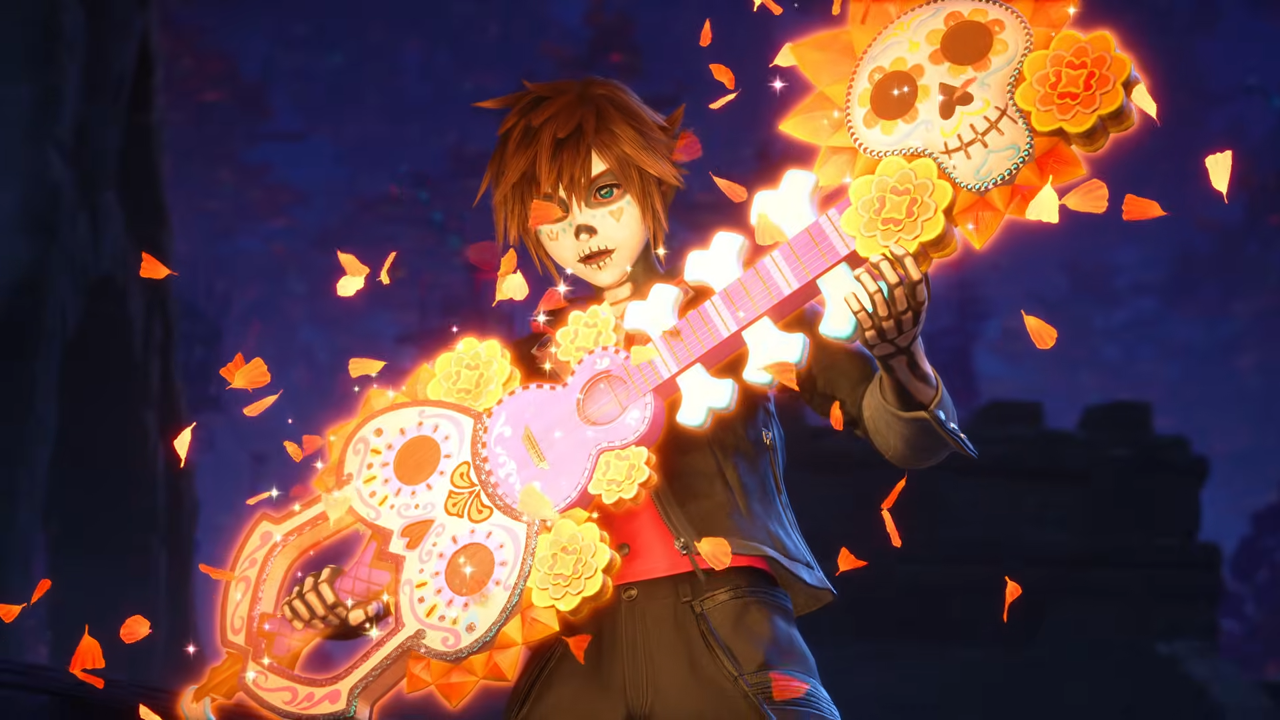
The revelation came following the recent D23 expo, where Square Enix unveiled new footage showcasing the first confirmed Disney world for Kingdom Hearts 4: the vibrant afterlife setting from Pixar’s beloved 2017 film Coco. In the trailer, viewers watched as a pair of sinister Heartless creatures emerged and began creeping menacingly toward Miguel, the young musician protagonist of the film. What caught the attention of eagle-eyed fans was a subtle but significant detail: the Heartless completely ignored the skeletal residents of the Land of the Dead, focusing their predatory attention solely on Miguel, the only living person present in the scene.
Fan Theory Connects to Original Game Documentation
Shortly after the trailer debuted, a Kingdom Hearts enthusiast known as Noir LilBomber shared an observation on social media that quickly gained traction throughout the passionate fanbase. The theory suggested that the Heartless behavior shown in the trailer wasn’t merely coincidental but was actually a deliberate callback to established lore from the very first Kingdom Hearts game, released over twenty years ago. Specifically, the connection traces back to a collectible item known as Ansem’s Report 4, an in-game document that players could discover while exploring the original adventure.
The report in question contains a passage that reads: “The Heartless appear in groups, and are multiplying rapidly. I’ve provided them both living and nonliving samples. They’ve responded only to the living.” This scientific observation, written by the enigmatic Ansem as he studied the nature of Heartless creatures, established a fundamental rule about their behavior that most players likely forgot amid the countless plot twists and revelations that followed in subsequent games. The fact that Kingdom Hearts 4 appears to honor this detail speaks volumes about the development team’s dedication to internal consistency.
Historical Precedent in Halloween Town
This behavioral quirk of the Heartless actually manifested in a meaningful way during the original Kingdom Hearts adventure, specifically in the Halloween Town world based on Tim Burton’s The Nightmare Before Christmas. When protagonist Sora and his companions Donald and Goofy first arrived in this realm populated largely by undead and supernatural creatures, the Heartless remained surprisingly docile and non-aggressive. The ghosts, vampires, and skeletal residents of Halloween Town presented no interest to these creatures of darkness, which seemed almost inert in their presence.
It wasn’t until Jack Skellington and the eccentric Dr. Finkelstein constructed an artificial heart — attempting to understand the concept of love and emotion — that the Heartless suddenly became violent and aggressive. This plot point cleverly reinforced the lore established in Ansem’s Reports while also providing a unique narrative hook for that particular world. The artificial heart created a target for the Heartless, drawing out their predatory nature in a way that the undead inhabitants never could. This attention to detail demonstrated even in 2002 that Nomura and his team were thinking carefully about how their fantasy creatures would logically interact with different Disney properties.
The Broader Implications for Kingdom Hearts 4
The Coco world represents a perfect testing ground for this particular piece of lore, as the Land of the Dead is populated almost entirely by spirits and skeletal beings who have already passed on from the world of the living. Miguel’s presence as a living boy who accidentally crossed into this realm makes him the sole beacon of life that the Heartless can detect, creating natural dramatic tension that aligns perfectly with both the source material and established Kingdom Hearts mythology. This synergy between Disney property and game mechanics represents the kind of thoughtful world-building that fans have come to expect from the series at its best.
Kingdom Hearts 4 has been eagerly anticipated by fans who have waited years since the conclusion of the “Dark Seeker Saga” with Kingdom Hearts 3 in 2019. The new installment promises to begin a fresh chapter in the franchise’s story while introducing groundbreaking visual improvements powered by Unreal Engine 5. The game will reportedly explore new concepts including the mysterious “Quadratum,” a realistic urban environment that contrasts sharply with the colorful Disney worlds the series is known for. With such ambitious goals, it would have been understandable if some minor lore details fell by the wayside.
Yet the development team’s commitment to maintaining consistency with even the most obscure documentation from over two decades ago suggests that longtime fans will find plenty to appreciate in this new adventure. The Kingdom Hearts community has always prided itself on its deep knowledge of the series’ complex mythology, and moments like this reward that dedication. Whether intentional or serendipitous, the Heartless behavior in the Coco trailer demonstrates that the creative minds at Square Enix understand what makes their franchise special: the careful weaving of disparate elements into a cohesive, internally consistent universe where even the smallest details matter.
Expert Opinion: This level of attention to obscure lore details bodes extremely well for Kingdom Hearts 4’s overall narrative quality. Tetsuya Nomura’s team demonstrating awareness of twenty-year-old documentation suggests they’re approaching this new saga with the same meticulous world-building that made the original game so compelling. For long-suffering fans who have spent years memorizing every report and cutscene, this validation of their dedication could signal that Kingdom Hearts 4 will reward deep engagement with the series’ mythology in ways that more casual approaches to sequel development often fail to achieve.