The original Pokemon Red and Pokemon Green stand among the most beloved video games ever created, holding precious childhood memories for millions of players worldwide. These groundbreaking titles, released in Japan in 1996 before conquering the global market, introduced an entire generation to the joy of catching, training, and battling pocket monsters. However, those cherished memories are now being tested as an AI-generated recreation of the games’ iconic opening scene has surfaced online, delivering what many are calling a deeply disturbing digital nightmare that transforms beloved childhood companions into unsettling abominations.
The controversial video, shared by Twitter user Paulius on July 30, 2026, showcases an uncanny 3D recreation of Pallet Town rendered entirely through artificial intelligence. Viewed from a first-person perspective, the AI-generated version initially presents a dreary, soulless interpretation of the quaint starting village that players have explored countless times over the past three decades. The atmosphere feels immediately off, with textures and lighting that create a vaguely nauseating experience that only intensifies as the virtual camera makes its way toward Professor Oak’s laboratory, where the true horror awaits unsuspecting viewers.
The Nightmare in Oak’s Laboratory
What unfolds inside the AI-generated Professor Oak’s lab has left viewers genuinely disturbed. The recreation attempts to present the classic moment when new trainers choose their first Pokemon companion from three options: Bulbasaur, Charmander, and Squirtle. These creatures have been beloved mascots for nearly thirty years, appearing in countless games, television episodes, movies, and merchandise. However, the AI’s interpretation transforms these friendly companions into something far more sinister. Bulbasaur emerges with vacant red eyes and a completely featureless expression that, while deeply unpleasant, represents perhaps the least offensive of the three nightmarish recreations.
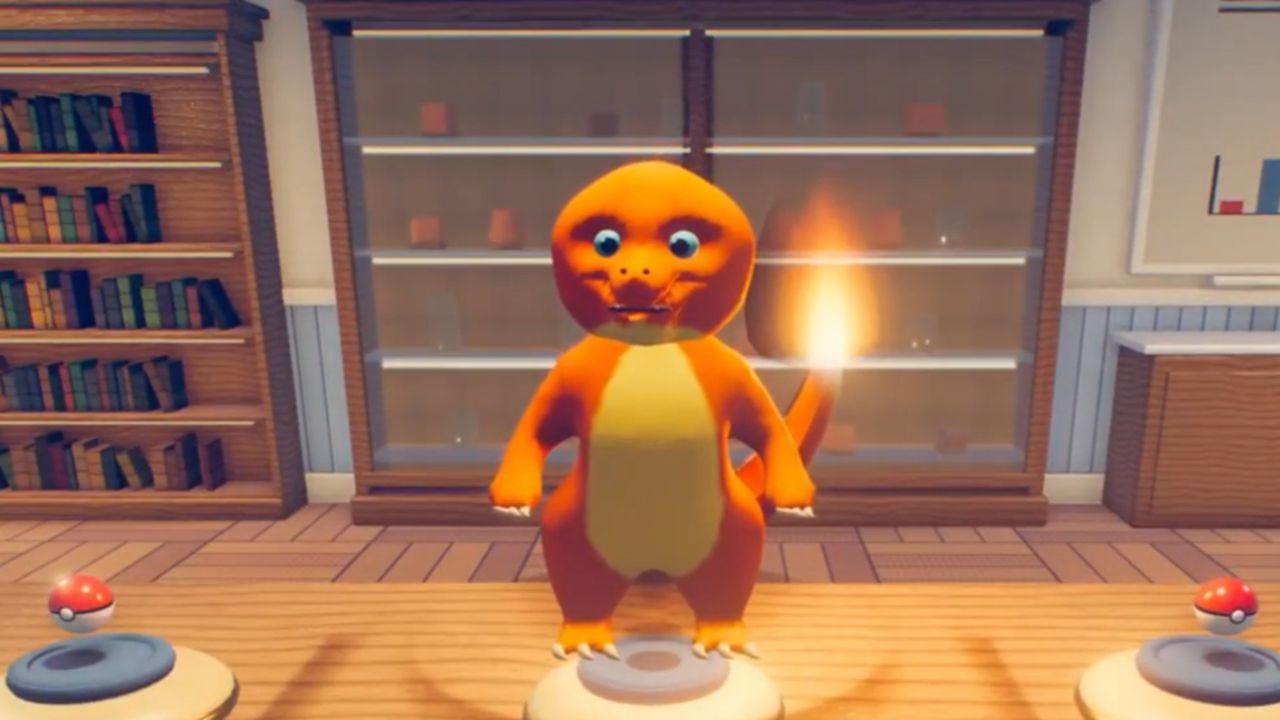
Charmander, the fire-type Pokemon that has remained a fan favorite since the franchise’s inception, receives arguably the most disturbing treatment. Viewers have described the AI-generated version as appearing to have been “put through a meat grinder and reformed by a toddler with two left hands.” The beloved flame-tailed creature, which eventually evolves into the powerful Charizard, has been rendered almost unrecognizable, its familiar orange form twisted into something that defies the charming simplicity of the original sprite-based design. For fans who chose Charmander as their first partner Pokemon decades ago, the sight reportedly borders on traumatic.
Squirtle’s ‘Forever Haunted’ Expression
Perhaps nothing in the AI recreation has garnered more visceral reactions than the appearance of Squirtle, the water-type starter Pokemon. According to Paulius himself, who describes the AI Squirtle as “forever haunted,” the creature spasms unnaturally from its Poke Ball before standing in an unsettling pose that defies the cheerful demeanor fans associate with the character. The expression worn by this AI-generated Squirtle has been described as genuinely threatening, featuring a vicious smile and eyes that viewers have compared to “portals to black holes.” The unsettling nature of this recreation has prompted widespread reactions across social media, with many users expressing that they cannot unsee what they’ve witnessed.
The technical aspects behind this controversial creation reveal the extent of AI’s current capabilities—and perhaps its limitations when handling beloved intellectual properties. According to Paulius, the entire video was generated using Claude AI with prompts provided by “AI whisperer” Matt Shumer. “Mind blowing part: Claude generated all the pixels. Every single one. Zero custom assets,” Paulius explained, highlighting that no traditional game assets or artwork were used in the creation. This means every disturbing frame, every unsettling texture, and every nightmarish creature expression emerged entirely from artificial intelligence attempting to interpret and recreate something that millions hold dear.
The Future of AI-Generated Gaming Content
The viral spread of this AI recreation raises broader questions about the intersection of artificial intelligence and cherished entertainment properties. One Twitter user humorously dubbed the AI-forsaken creatures “chormandur, balbisour, squart,” capturing the essence of how far these recreations fall from their source material. More concerning to some fans is Paulius’s apparent interest in further developing this technology, suggesting that such AI-generated content could eventually become more refined and widespread. For now, Nintendo, which fiercely protects its Pokemon intellectual property, remains the primary barrier between experimental AI recreations and any official implementation of such technology.
The Pokemon franchise has maintained remarkable consistency in its character designs since 1996, with creatures like Pikachu, Charmander, and Squirtle becoming instantly recognizable worldwide. This consistency has been carefully curated by The Pokemon Company and Nintendo, ensuring that each generation of fans encounters the same beloved designs that captured hearts decades ago. The jarring nature of the AI recreation serves as a stark reminder of how much emotional investment people have in these digital creatures and how unsettling it can be when artificial intelligence attempts to replicate something that carries such profound nostalgic weight for millions of players across multiple generations.
Expert Opinion: This AI recreation demonstrates both the impressive technical progress and fundamental limitations of current generative AI in handling emotionally significant intellectual properties. While the technology can generate every pixel, it fundamentally lacks the intentional design philosophy and emotional intelligence that human artists bring to beloved characters. As AI tools continue advancing, we can expect increased tension between technological capability and the preservation of artistic integrity in cherished franchises, likely prompting stricter protective measures from major entertainment companies like Nintendo.