
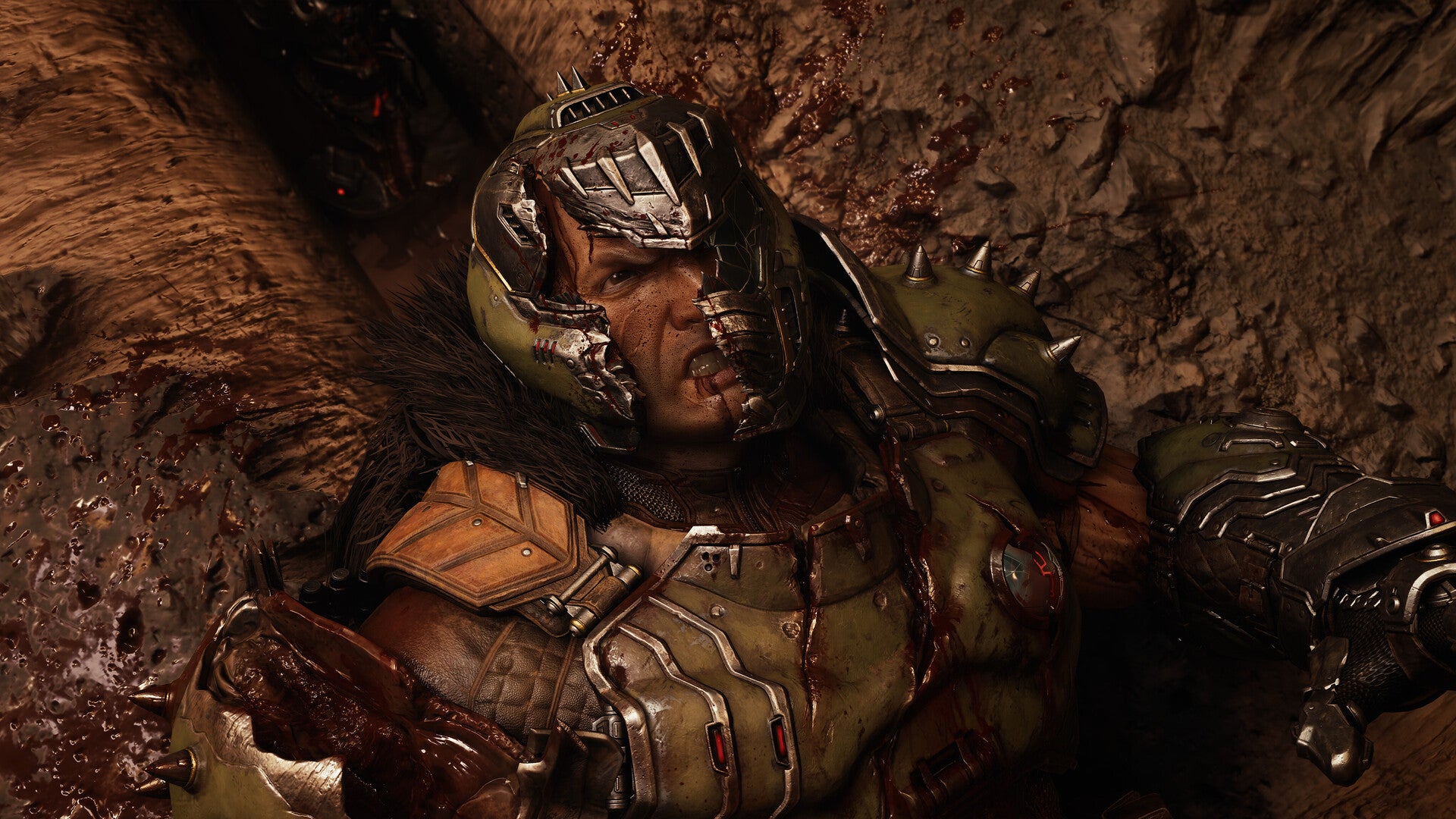
In the aftermath of devastating layoffs that swept through legendary game developer id Software in July 2024, one of the studio’s senior programmers has delivered a scathing critique of Microsoft and Xbox’s handling of the situation. Chris Hays, lead services programmer at id Software who has been with the company since 2010, spoke candidly about the impact of losing 136 colleagues in a recent interview with Andre Peschke on the German podcast Auf ein Bier. His assessment of the corporate decision-makers was blunt and unsparing: “They fundamentally don’t understand art.”
Hays, who has contributed to some of the most celebrated first-person shooters in gaming history including Doom Eternal, painted a grim picture of the studio’s current state. “It’s hard to make a game that is AAA, that’s like we’ve done before, with half the people. And by hard, I mean impossible,” he explained. The programmer emphasized that entire departments and disciplines have been eliminated, leaving critical gaps in the team’s capabilities. When asked about any new plans Microsoft might have for operating with a reduced workforce, Hays indicated that no such information has been communicated to the remaining staff.
A Studio Defined by Its People
The emotional weight of the layoffs was evident throughout Hays’ interview. “We’re not the same id. We’re half the same id,” he stated. “id was the people. What made us special was the people and the relationships we have.” This sentiment carries particular significance given id Software’s legendary status in gaming history. Founded in 1991 by John Carmack, John Romero, and others, id Software essentially invented the first-person shooter genre with groundbreaking titles like Wolfenstein 3D and the original Doom. The company’s technical innovations, including the pioneering of 3D graphics engines, helped shape the entire video game industry.
In response to the layoffs, id Software issued a statement to media outlets claiming that the restructuring left the studio “about the same size we were when making Doom 2016.” However, Hays directly contradicted this reassurance, stating that id now employs fewer people than worked on that acclaimed 2016 reboot. He questioned what kind of games the diminished team could realistically produce, suggesting the studio’s current size might only support projects equivalent to “a single-player Xbox 360 game.”
Corporate Messaging and Internal Reality
According to Hays, studio management has been given specific talking points about what can and cannot be said publicly. He characterized the internal communications as attempts to prevent further departures rather than genuine transparency. “They don’t want more people to jump ship and say, ‘Oh, there’s no more future in id, so we’re all going to leave,'” he explained. “At the end of the day, most of it was just trying to tell us that, ‘Oh, no, everything is fine. Things will be OK.'” This disconnect between corporate messaging and ground-level reality has become a common theme in the gaming industry’s ongoing reckoning with mass layoffs.
The layoffs at id Software were part of a much larger restructuring initiative at Xbox, which new CEO Asha Sharma described as the “most significant restructure in Xbox history.” The initial announcement impacted 1,600 employees immediately, with another 1,600 positions expected to be eliminated throughout the current financial year. This brings the total to 3,200 jobs lost across Microsoft’s gaming division, affecting multiple studios under the Xbox umbrella.
The Game Pass Question
Hays also raised questions about Microsoft’s Game Pass subscription service and its impact on how game sales are measured and valued. When asked why id Software was hit so hard by the layoffs, he admitted uncertainty but pointed to potential issues with the Game Pass business model. “Whenever we see the Microsoft financial reports that say there were poor sales under Bethesda. What’s a sale if you have Game Pass?” he questioned. “You’re not doing a game-sold business model. They fundamentally don’t understand art. They don’t. They don’t understand art. They don’t understand games. They don’t understand that business model.”
This criticism touches on a broader industry debate about subscription services and their long-term sustainability for game development. While Game Pass has been praised for increasing accessibility to games, critics have raised concerns about whether the model adequately compensates developers and incentivizes the creation of high-quality, expensive AAA titles. The tension between traditional game sales metrics and subscription-based success indicators remains unresolved, leaving studios uncertain about how their work is being evaluated.
A Legacy Under Threat
Despite the turmoil, id Software’s recent output has been exceptional. Doom: The Dark Ages launched to critical acclaim, and its Revelations DLC released just last month to strong reviews. The studio has successfully maintained its reputation as the premier developer of fast-paced, visceral first-person shooters. However, Hays expressed concern about the lack of clear communication regarding goals and expectations. He noted that under previous ownership by ZeniMax, success was evaluated based on critical reception and sales performance, with clear accountability structures. “That is obviously not how Microsoft is operating. It doesn’t make any sense,” he said.
The situation at id Software reflects broader challenges facing the gaming industry, which has seen unprecedented layoffs over the past two years. Major publishers and developers have cut thousands of positions, often citing economic pressures and the need for efficiency. However, critics argue that these cuts damage the creative foundations that make great games possible, prioritizing short-term financial metrics over long-term artistic development. For id Software, a studio that helped define an entire genre and continues to set standards for excellence, the question now is whether it can maintain its legendary status with half its team gone.
Expert Opinion: The gaming industry’s current wave of consolidation and cost-cutting represents a fundamental misalignment between corporate financial strategies and creative development needs. Studios like id Software require not just talented individuals but established team dynamics and institutional knowledge that cannot be rebuilt quickly after mass layoffs. Microsoft’s challenge will be proving that subscription-based models can sustain the creation of premium gaming experiences, or risk watching its most valuable studios decline into mediocrity.